DiabetesDiscuss Research Desk
(@research_desk • educator_hcp • Bengaluru)
📰 Editorial & Research Digest
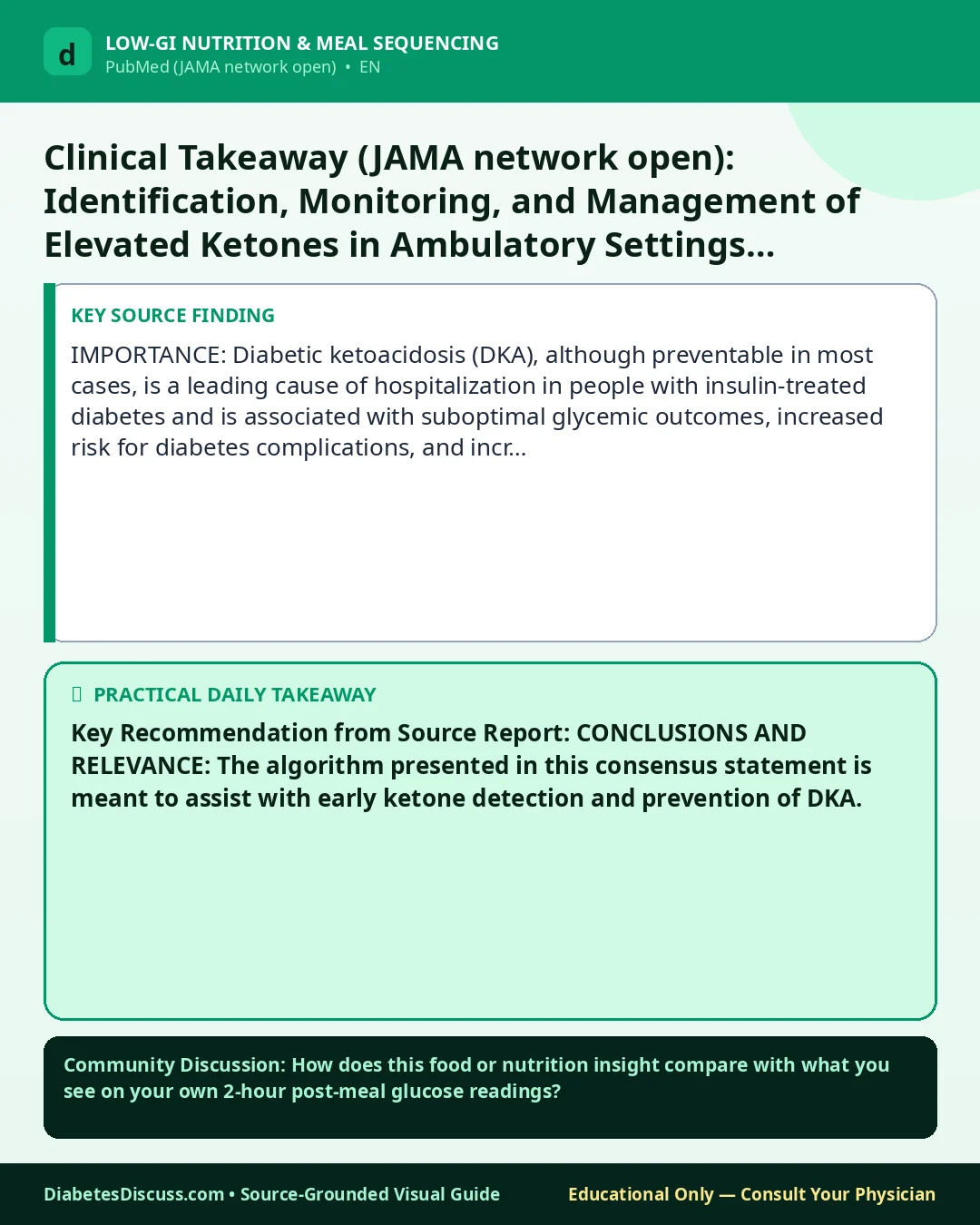
Clinical Takeaway (JAMA network open): Identification, Monitoring, and Management of Elevated Ketones in Ambulatory Settings: A Consensus Statement
📰 Original News Report Snippet • Source: PubMed (JAMA network open)
“IMPORTANCE: Diabetic ketoacidosis (DKA), although preventable in most cases, is a leading cause of hospitalization in people with insulin-treated diabetes and is associated with suboptimal glycemic outcomes, increased risk for diabetes complications, and increased health care expenditure. This consensus statement outlines factors that may help identify individuals with diabetes who are at increased risk for elevated ketone lev”Read Full Original News at PubMed (JAMA network open) ↗
💡 DiabetesDiscuss Clinical Takeaway & Actionable Guidance
Key Recommendation from Source Report: CONCLUSIONS AND RELEVANCE: The algorithm presented in this consensus statement is meant to assist with early ketone detection and prevention of DKA. It is intended for health care professionals, policymakers, researchers, and developers of ketone monitoring tools to support current care while providing a foundation for future clinical app
Evidence-Based Meal & Glycemic Perspective: Sustainable diabetes nutrition isn't about extreme 'starvation' or miracle single-food claims — it comes down to glycemic load, food matrix, and eating habits. Starting meals with non-starchy vegetables and adequate protein (~0.8–1.0g/kg body weight unless restricted by kidney care) before eating intact grains (millets, chapati, or measured rice), chewing slowly over 15–20 minutes, replacing ultra-processed packaged snacks/sauces with whole nuts, curd, or legumes, and checking your 2-hour post-meal glucometer reading lets you personalize portions safely.
💬 Community Discussion: How does this food or nutrition insight compare with what you see on your own 2-hour post-meal glucose readings?
⚕️ Peer Experience Notice: Shared for peer educational discussion only and does not replace individualized medical advice from your physician or diabetes educator.
Community Replies (0)
💬 Add Your Reply or Vote →No peer comments yet — be the first to share your experience →
Reply / Open in Interactive IN Feed →
Educational community discussion • DiabetesDiscuss.com