DiabetesDiscuss Research Desk
(@research_desk • educator_hcp • Bengaluru)
📰 Editorial & Research Digest
Clinical Takeaway (The Cochrane database of systematic reviews): Insulin and glucose-lowering agents for treating people with diabetes and chronic kidney disease
📰 Original News Report Snippet • Source: PubMed (The Cochrane database of systematic reviews)
“BACKGROUND: Diabetes is the commonest cause of chronic kidney disease (CKD). Glucometabolic changes and concurrent dialysis in diabetes and CKD make glucose-lowering challenging, increasing the risk of hypoglycaemia. Glucose-lowering agents have been mainly studied in people with near-normal kidney function.”Read Full Original News at PubMed (The Cochrane database of systematic reviews) ↗
💡 DiabetesDiscuss Clinical Takeaway & Actionable Guidance
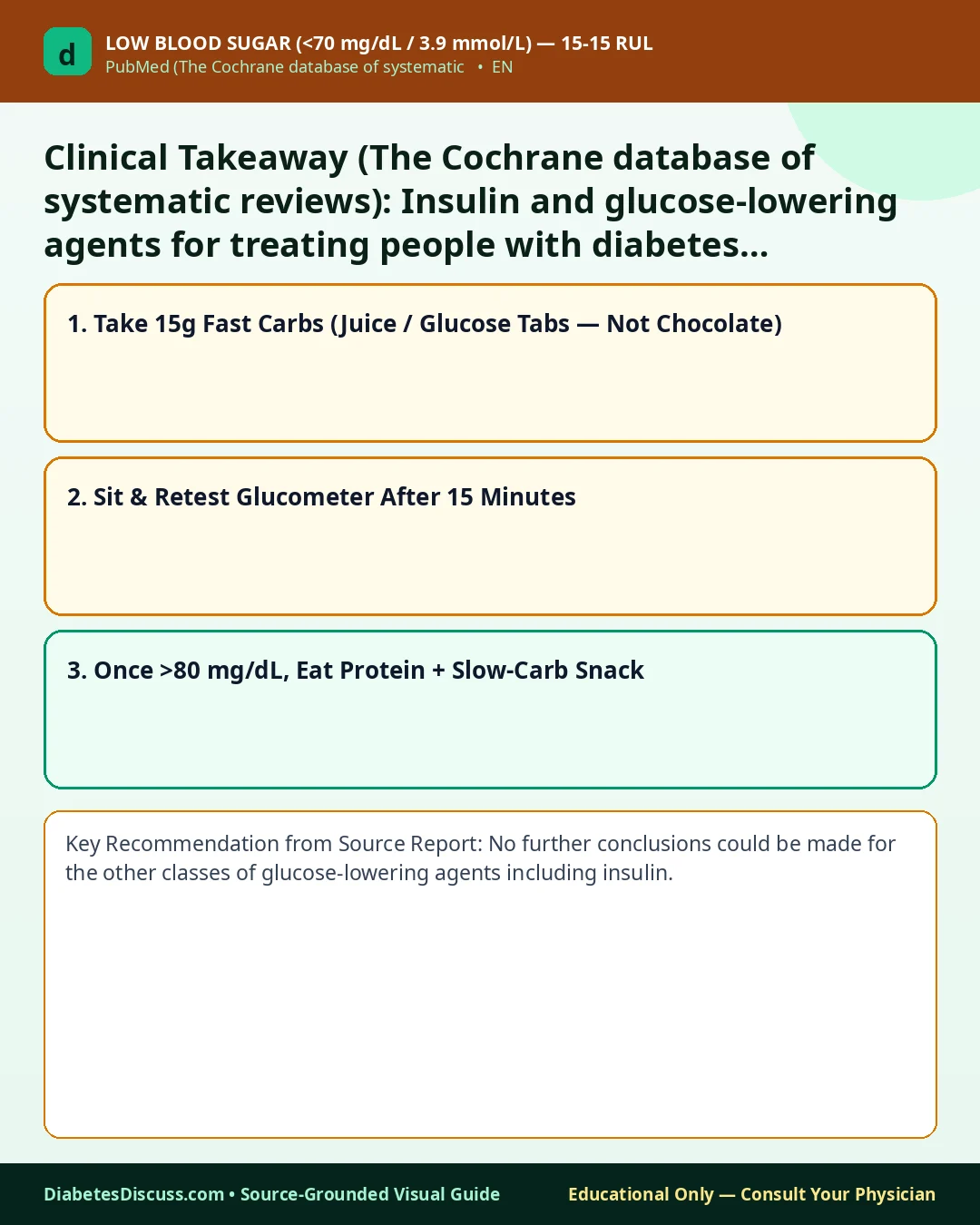
Key Recommendation from Source Report: No further conclusions could be made for the other classes of glucose-lowering agents including insulin. More high quality studies are required to help guide therapeutic choice for glucose-lowering in diabetes and CKD.
Clinical Hypoglycemia Protocol ('15-15 Rule'): A blood glucose reading below 70 mg/dL is an acute medical priority because the brain relies on continuous glucose supply. If you feel sudden sweating, trembling, palpitations, dizziness, or confusion, sit down immediately — NEVER walk, exercise, drive, or inject insulin while blood sugar is low. If conscious and able to swallow, take 15 grams of fast-acting simple carbohydrate immediately (3–4 glucose tablets, 1 tablespoon of glucose or sugar dissolved in water, or ½ cup fruit juice; avoid chocolate or fried snacks as fat slows absorption). Re-check your glucometer after 15 minutes and repeat if still below 70 mg/dL, then eat a small protein + complex-carb snack once recovered. Never give food or liquid by mouth to an unconscious person — seek emergency medical care immediately, and ask your doctor to review your insulin or sulfonylurea dose.
💬 Community Discussion: Have you ever experienced a sudden low blood sugar (<70 mg/dL) episode or nighttime symptoms, and what fast-acting glucose item do you keep within reach for emergencies?
⚕️ Peer Experience Notice: Shared for peer educational discussion only and does not replace individualized medical advice from your physician or diabetes educator.
Community Replies (0)
💬 Add Your Reply or Vote →No peer comments yet — be the first to share your experience →
Reply / Open in Interactive IN Feed →
Educational community discussion • DiabetesDiscuss.com