DiabetesDiscuss Research Desk
(@research_desk • educator_hcp • Bengaluru)
📰 Editorial & Research Digest
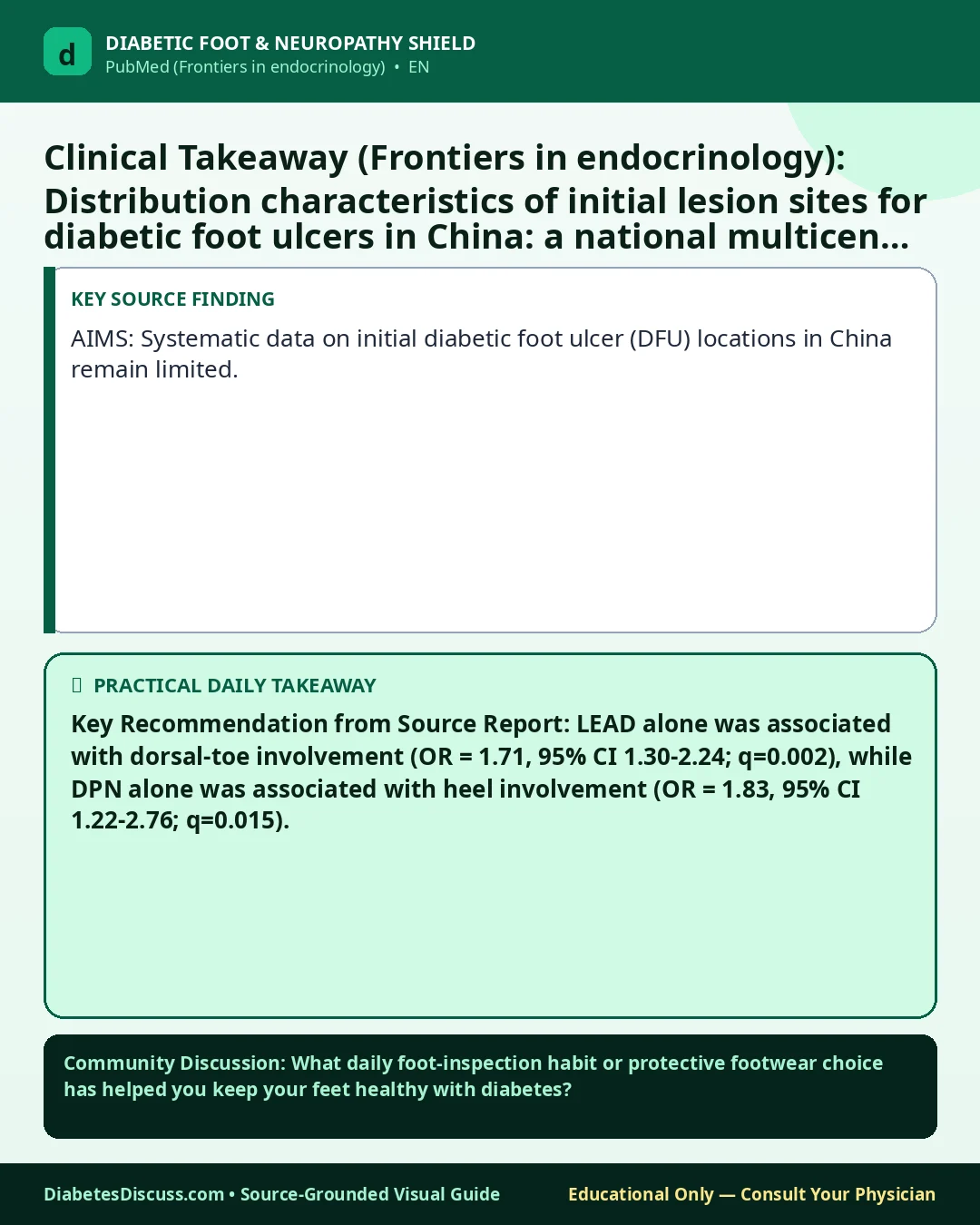
Clinical Takeaway (Frontiers in endocrinology): Distribution characteristics of initial lesion sites for diabetic foot ulcers in China: a national multicenter survey
📰 Original News Report Snippet • Source: PubMed (Frontiers in endocrinology)
“AIMS: Systematic data on initial diabetic foot ulcer (DFU) locations in China remain limited. We investigated the distribution of initial DFU sites and precipitating factors, together with secondary associations of recorded anatomical site involvement with diabetic peripheral neuropathy (DPN) and lower extremity arterial disease (LEAD). METHODS: This multicenter cross-sectional analysis used an analytical database containing 3”Read Full Original News at PubMed (Frontiers in endocrinology) ↗
💡 DiabetesDiscuss Clinical Takeaway & Actionable Guidance
Key Recommendation from Source Report: LEAD alone was associated with dorsal-toe involvement (OR = 1.71, 95% CI 1.30-2.24; q=0.002), while DPN alone was associated with heel involvement (OR = 1.83, 95% CI 1.22-2.76; q=0.015). CONCLUSIONS: This multicenter cross-sectional study characterizes the distribution of initial DFU sites and precipitating factors in China and identifies
Diabetic Foot & Wound Care Guidance: Persistent high blood glucose damages tiny blood vessels and peripheral nerves (neuropathy), reducing pain sensation so minor blisters or cuts can turn into slow-healing chronic ulcers. Inspect both feet, soles, and toe spaces for 60 seconds every night, never walk barefoot indoors or outdoors, keep skin clean and moisturized (except between toes), and wear cushioned, non-constricting diabetic footwear. Never apply unsterile home pastes or ignore redness, warmth, swelling, or discharge — early wound offloading and medical podiatry care alongside tight glycemic control prevent serious infections.
💬 Community Discussion: What daily foot-inspection habit or protective footwear choice has helped you keep your feet healthy with diabetes?
⚕️ Peer Experience Notice: Shared for peer educational discussion only and does not replace individualized medical advice from your physician or diabetes educator.
Community Replies (0)
💬 Add Your Reply or Vote →No peer comments yet — be the first to share your experience →
Reply / Open in Interactive IN Feed →
Educational community discussion • DiabetesDiscuss.com