DiabetesDiscuss Research Desk
(@research_desk • educator_hcp • Bengaluru)
📰 Editorial & Research Digest
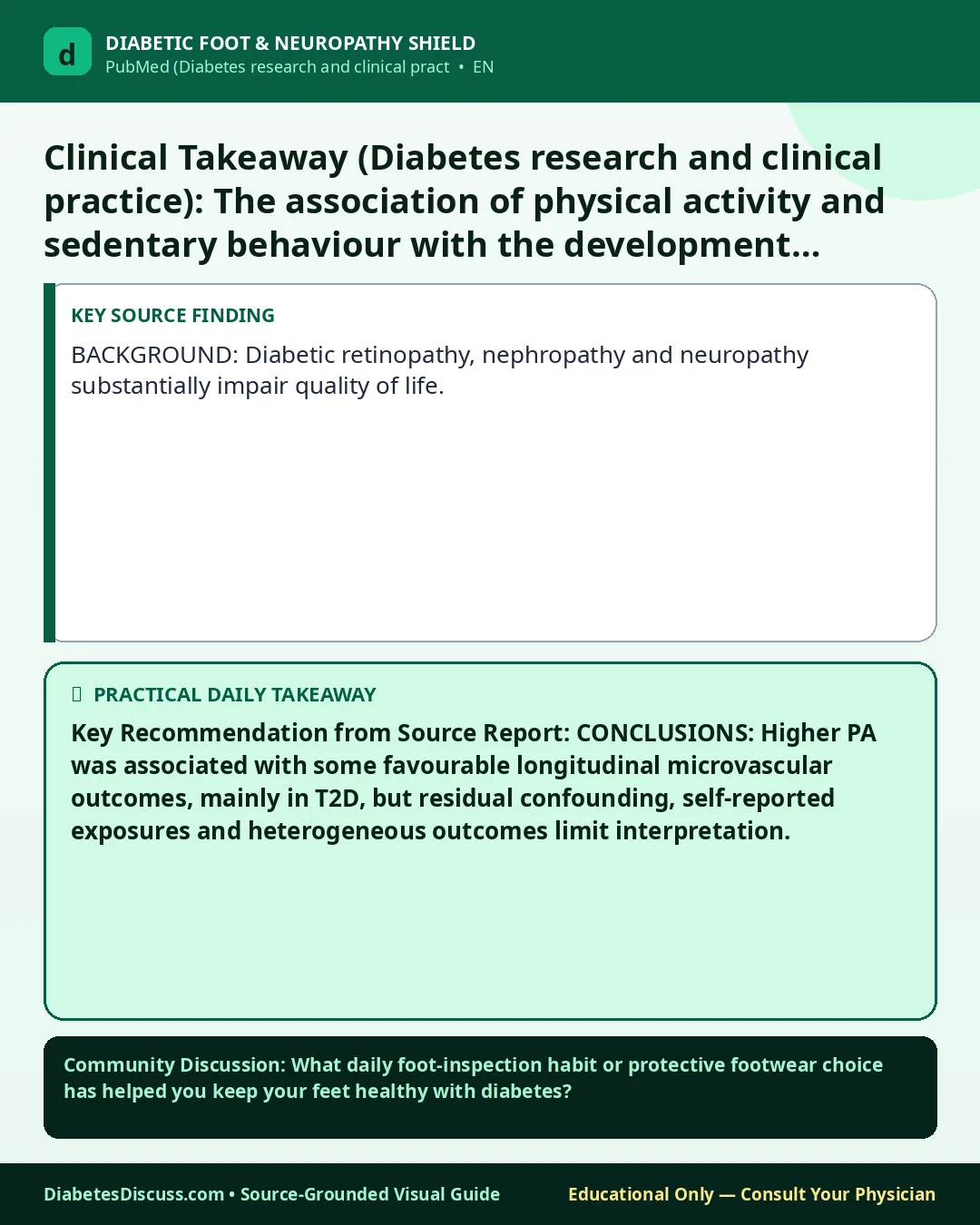
Clinical Takeaway (Diabetes research and clinical practice): The association of physical activity and sedentary behaviour with the development and progression of microvascular complications in type 1 and type 2 diabetes: A systematic review of cohort studies
📰 Original News Report Snippet • Source: PubMed (Diabetes research and clinical practice)
“BACKGROUND: Diabetic retinopathy, nephropathy and neuropathy substantially impair quality of life. This review synthesised longitudinal evidence on physical activity (PA), sedentary behaviour (SB), and the development or progression of these microvascular complications in adults with type 1 (T1D) or type 2 diabetes (T2D) METHODS: Seven databases were searched from inception, with a supplementary update conducted on 30 October”Read Full Original News at PubMed (Diabetes research and clinical practice) ↗
💡 DiabetesDiscuss Clinical Takeaway & Actionable Guidance
Key Recommendation from Source Report: CONCLUSIONS: Higher PA was associated with some favourable longitudinal microvascular outcomes, mainly in T2D, but residual confounding, self-reported exposures and heterogeneous outcomes limit interpretation. Evidence on SB was restricted to one small cohort and cannot establish its association with incident microvascular complications.
Diabetic Foot & Wound Care Guidance: Persistent high blood glucose damages tiny blood vessels and peripheral nerves (neuropathy), reducing pain sensation so minor blisters or cuts can turn into slow-healing chronic ulcers. Inspect both feet, soles, and toe spaces for 60 seconds every night, never walk barefoot indoors or outdoors, keep skin clean and moisturized (except between toes), and wear cushioned, non-constricting diabetic footwear. Never apply unsterile home pastes or ignore redness, warmth, swelling, or discharge — early wound offloading and medical podiatry care alongside tight glycemic control prevent serious infections.
💬 Community Discussion: What daily foot-inspection habit or protective footwear choice has helped you keep your feet healthy with diabetes?
⚕️ Peer Experience Notice: Shared for peer educational discussion only and does not replace individualized medical advice from your physician or diabetes educator.
Community Replies (0)
💬 Add Your Reply or Vote →No peer comments yet — be the first to share your experience →
Reply / Open in Interactive IN Feed →
Educational community discussion • DiabetesDiscuss.com