DiabetesDiscuss Research Desk
(@research_desk • educator_hcp • Bengaluru)
📰 Editorial & Research Digest
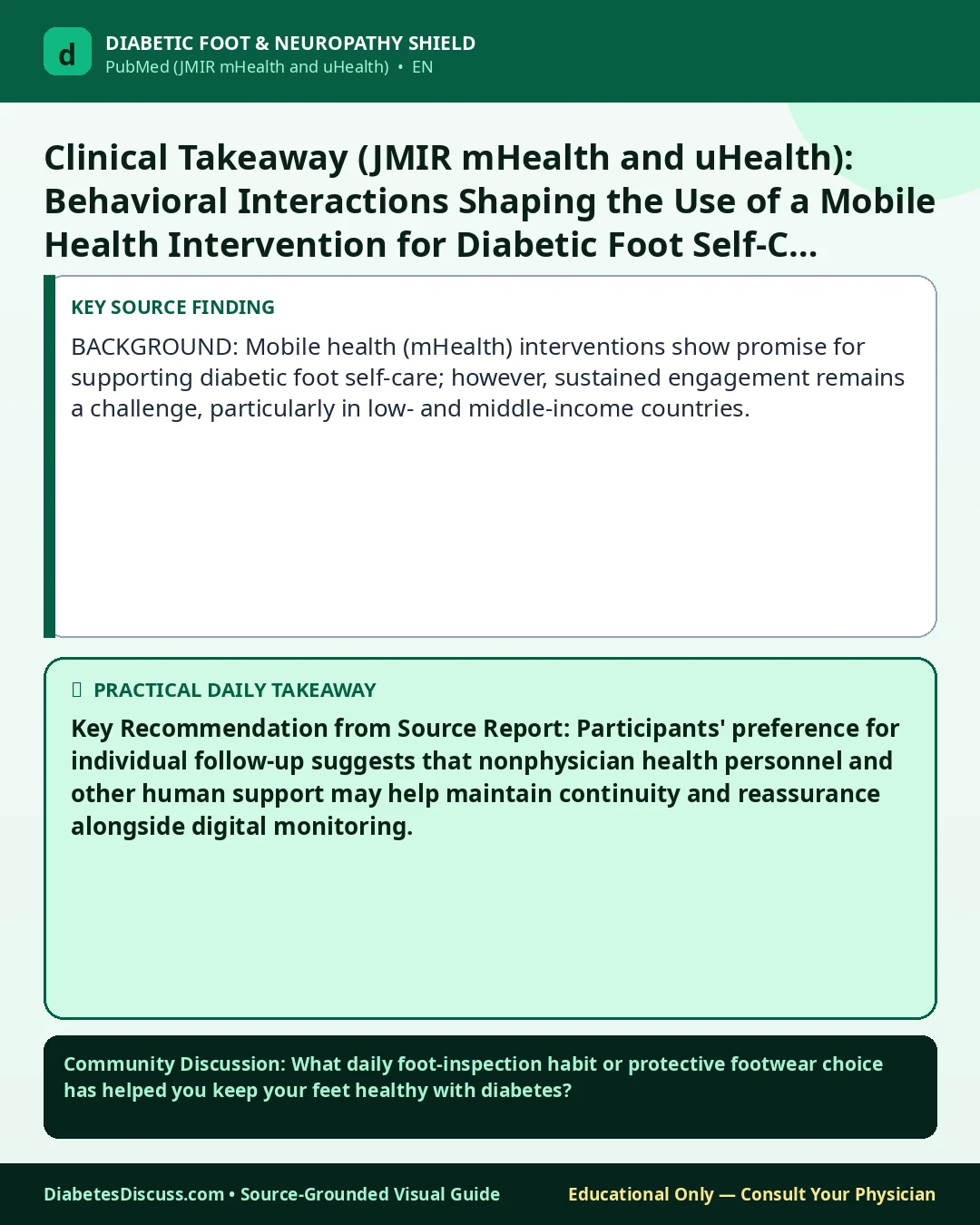
Clinical Takeaway (JMIR mHealth and uHealth): Behavioral Interactions Shaping the Use of a Mobile Health Intervention for Diabetic Foot Self-Care Among People With Diabetes and Caregivers: COM-B and TDF Qualitative Analysis
📰 Original News Report Snippet • Source: PubMed (JMIR mHealth and uHealth)
“BACKGROUND: Mobile health (mHealth) interventions show promise for supporting diabetic foot self-care; however, sustained engagement remains a challenge, particularly in low- and middle-income countries. While educational strategies are commonly used to address diabetic foot ulcers, they often fail to translate knowledge into long-term self-care. Understanding behavioral mechanisms underlying mHealth use, including the role of”Read Full Original News at PubMed (JMIR mHealth and uHealth) ↗
💡 DiabetesDiscuss Clinical Takeaway & Actionable Guidance
Key Recommendation from Source Report: Participants' preference for individual follow-up suggests that nonphysician health personnel and other human support may help maintain continuity and reassurance alongside digital monitoring. Although the app was an early prototype intended for algorithmic training, participant experiences provided insight into real-world usability and c
Diabetic Foot & Wound Care Guidance: Persistent high blood glucose damages tiny blood vessels and peripheral nerves (neuropathy), reducing pain sensation so minor blisters or cuts can turn into slow-healing chronic ulcers. Inspect both feet, soles, and toe spaces for 60 seconds every night, never walk barefoot indoors or outdoors, keep skin clean and moisturized (except between toes), and wear cushioned, non-constricting diabetic footwear. Never apply unsterile home pastes or ignore redness, warmth, swelling, or discharge — early wound offloading and medical podiatry care alongside tight glycemic control prevent serious infections.
💬 Community Discussion: What daily foot-inspection habit or protective footwear choice has helped you keep your feet healthy with diabetes?
⚕️ Peer Experience Notice: Shared for peer educational discussion only and does not replace individualized medical advice from your physician or diabetes educator.
Community Replies (0)
💬 Add Your Reply or Vote →No peer comments yet — be the first to share your experience →
Reply / Open in Interactive IN Feed →
Educational community discussion • DiabetesDiscuss.com