DiabetesDiscuss Research Desk
(@research_desk • educator_hcp • Bengaluru)
📰 Editorial & Research Digest
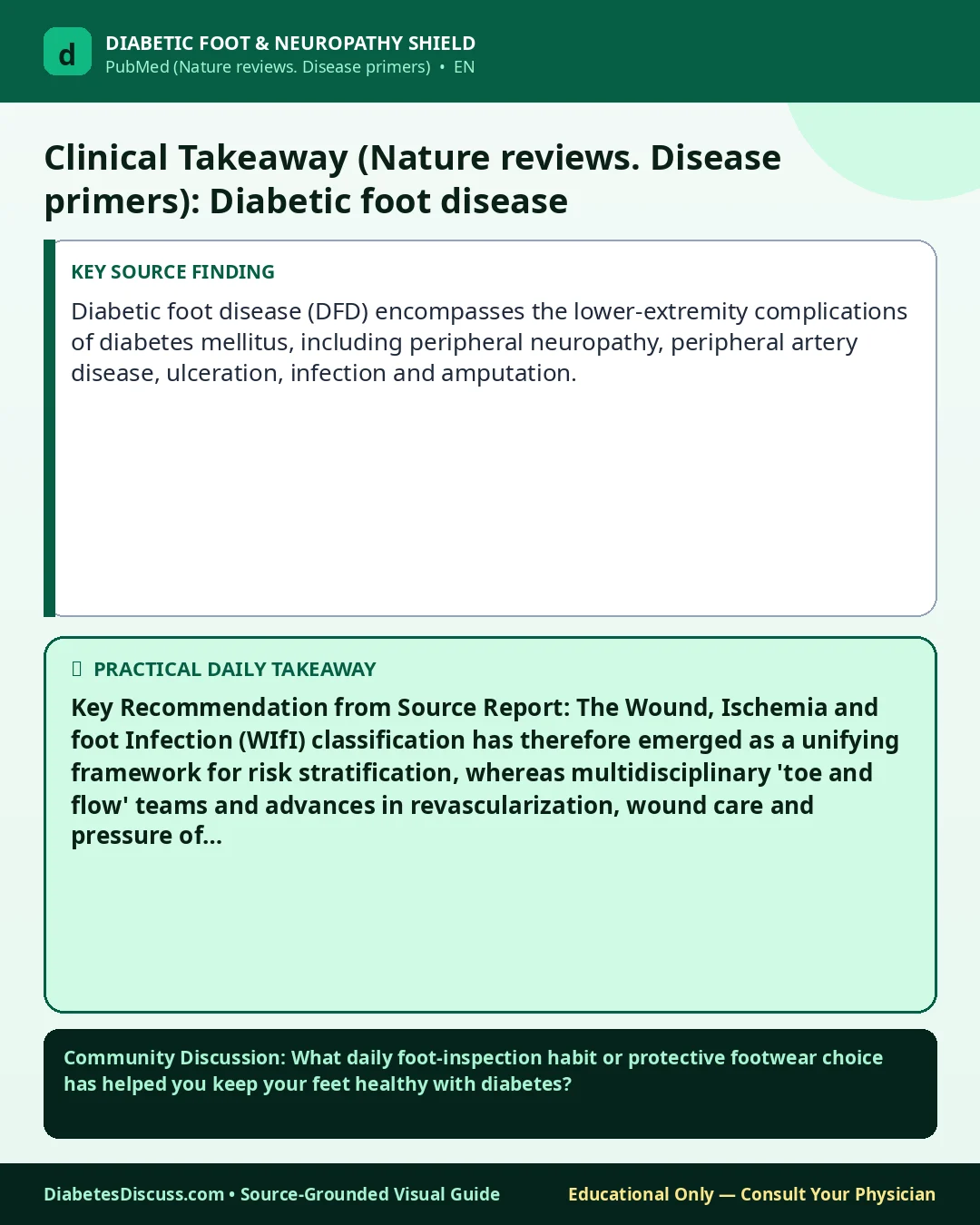
Clinical Takeaway (Nature reviews. Disease primers): Diabetic foot disease
📰 Original News Report Snippet • Source: PubMed (Nature reviews. Disease primers)
“Diabetic foot disease (DFD) encompasses the lower-extremity complications of diabetes mellitus, including peripheral neuropathy, peripheral artery disease, ulceration, infection and amputation. An estimated 199 million people worldwide had DFD in 2017, including 18.6 million with foot ulcers, which precede most lower-extremity amputations. The 5-year mortality approaches 30% after ulceration and >70% after major amputation, ri”Read Full Original News at PubMed (Nature reviews. Disease primers) ↗
💡 DiabetesDiscuss Clinical Takeaway & Actionable Guidance
Key Recommendation from Source Report: The Wound, Ischemia and foot Infection (WIfI) classification has therefore emerged as a unifying framework for risk stratification, whereas multidisciplinary 'toe and flow' teams and advances in revascularization, wound care and pressure offloading have transformed management. Even after ulcer healing, recurrence reaches 40% at 1 year and
Diabetic Foot & Wound Care Guidance: Persistent high blood glucose damages tiny blood vessels and peripheral nerves (neuropathy), reducing pain sensation so minor blisters or cuts can turn into slow-healing chronic ulcers. Inspect both feet, soles, and toe spaces for 60 seconds every night, never walk barefoot indoors or outdoors, keep skin clean and moisturized (except between toes), and wear cushioned, non-constricting diabetic footwear. Never apply unsterile home pastes or ignore redness, warmth, swelling, or discharge — early wound offloading and medical podiatry care alongside tight glycemic control prevent serious infections.
💬 Community Discussion: What daily foot-inspection habit or protective footwear choice has helped you keep your feet healthy with diabetes?
⚕️ Peer Experience Notice: Shared for peer educational discussion only and does not replace individualized medical advice from your physician or diabetes educator.
Community Replies (0)
💬 Add Your Reply or Vote →No peer comments yet — be the first to share your experience →
Reply / Open in Interactive IN Feed →
Educational community discussion • DiabetesDiscuss.com