Meditation, Breathwork & Stress Cortisol in Diabetes: How Calming Your Nervous System Lowers Fasting & Stress-Induced Blood Sugar
Ever seen your blood sugar jump 40 mg/dL during a stressful workday or sleepless night without eating a bite? Discover the HPA-axis cortisol mechanism, clinical trial data on mindfulness & HbA1c, and a step-by-step 10-minute vagus-nerve breathwork protocol.

Many diligent people with diabetes experience a baffling moment: they eat a textbook low-GI meal, yet a heated family argument, traffic stress, financial worry, or 5-hour fragmented sleep pushes their glucometer reading from 115 mg/dL to 165 mg/dL. Far from being "in your head," stress hyperglycemia is a hardwired neuroendocrine reflex—and targeted meditation and slow breathwork directly down-regulate it.
1. Why Stress & Poor Sleep Raise Blood Sugar Without Food (HPA-Axis Physiology)
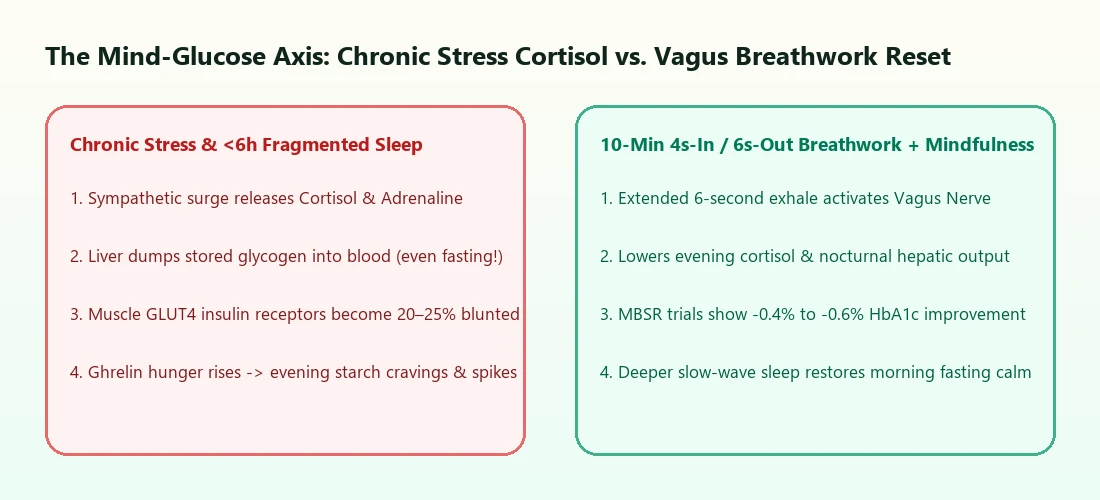
When your brain perceives threat, frustration, or sleep deprivation, the hypothalamus-pituitary-adrenal (HPA) axis and sympathetic nervous system release cortisol, epinephrine (adrenaline), norepinephrine, and glucagon. Evolutionarily designed to fuel physical escape, these hormones trigger three immediate metabolic shifts—while you remain seated at a desk:
- Hepatic Glycogenolysis & Gluconeogenesis: The liver rapidly breaks down stored glycogen and manufactures fresh glucose from amino acids, pouring sugar directly into the bloodstream.
- Cellular Insulin Resistance: Cortisol inhibits GLUT4 translocation in skeletal muscle and increases circulating free fatty acids, temporarily blunting insulin sensitivity by 20%–25%.
- Visceral Fat & Cravings: Persistently elevated evening cortisol promotes central abdominal fat storage and raises ghrelin, driving intense late-night cravings for refined starches and sweets.
2. What Clinical Trials Show About Meditation, MBSR & Yoga Nidra
Systematic reviews and meta-analyses of randomized controlled trials evaluating Mindfulness-Based Stress Reduction (MBSR), slow pranayama/coherent breathing, and guided meditation in adults with Type 2 diabetes demonstrate measurable clinical benefits alongside standard medical care:
- HbA1c Reduction: Regular 10–20 minute daily mindfulness and slow-breathing interventions lowered 3-to-6 month HbA1c by an average of 0.38% to 0.55% and reduced fasting plasma glucose by 12–22 mg/dL.
- Diabetes Burnout & Distress Relief: Significant reductions in Diabetes Distress Scale (DDS) scores, emotional eating, and nighttime blood pressure dipping abnormalities.
3. The 10-Minute "4-6 Vagal Reset" Breathwork & Body-Scan Protocol
The vagus nerve slows heart rate during exhalation (respiratory sinus arrhythmia). Making your exhale longer than your inhale flips the autonomic switch from sympathetic fight-or-flight to parasympathetic rest-and-digest within 3 to 5 minutes:
- Minutes 1–5 (Coherent 4-Second Inhale / 6-Second Exhale): Sit comfortably with spine upright and shoulders dropped. Rest one hand on your belly. Inhale softly through your nose for 4 seconds (letting the belly expand, chest quiet), then exhale smoothly through your nose or softly pursed lips for 6 seconds. That equals 6 calm breaths per minute.
- Minutes 6–10 (Non-Judgmental Body Scan): Soften your jaw, forehead, and hands. When anxious thoughts or self-criticism about a glucose reading arise, label them neutrally as "planning" or "judging" and return attention gently to the cool air entering the nostrils.
4. Mind-Body Practice & Sleep Hygiene Reference Table
Step-by-Step Usage & Clinical Protocol
- Practice 5–10 minutes of 4-second nasal inhale / 6-second slow exhale diaphragmatic breathing at the same anchor time daily (right after waking or before sleep).
- When an argument or deadline spikes stress, combine 3 minutes of slow breathing with a 10-minute gentle walk and a glass of water rather than stress-snacking.
- Protect a consistent 7–8 hour sleep window by dimming bright screens 45 minutes before bed and keeping dinner 3 hours before sleep.
- Log sleep hours and stress levels (1–5) beside unusual morning fasting readings for 1 week so you and your doctor can separate stress patterns from food patterns.
- Join peer support circles to share real-world diabetes burnout openly without stigma or food policing.
Common Home-Testing Mistakes to Avoid
- ⚠️ Forcing rapid hyperventilation or prolonged breath-holding (stick to gentle, comfortable 4s-in / 6s-out nasal breathing, especially if hypertension or retinopathy is present).
- ⚠️ Using meditation as a substitute for prescribed diabetes or blood-pressure medications—mindfulness is an evidence-based complement, never a replacement.
- ⚠️ Drinking caffeinated tea/coffee after 3:00 PM, which fragments deep slow-wave sleep even if you fall asleep on time.
- ⚠️ Checking work messages in bed at midnight, spiking nocturnal cortisol right before Dawn Phenomenon hours.
How This Helps Your Daily Diabetes Management
- ✓ Reduces stress-induced hepatic glucose surges, emotional eating, and morning fasting variability.
- ✓ Lowers resting systolic blood pressure by 4–7 mmHg and improves Heart Rate Variability (vagal tone).
- ✓ Relieves chronic 'diabetes burnout' so healthy nutrition and medication habits stay effortless long-term.

FreeStyle Libre 2 / 3 Waterproof Sensor Overpatches (25-Pack Breathable Cotton)
Top-rated by 420+ Indian community members for monsoon & summer workout sweat protection without skin irritation.
Affiliate Disclosure: As an Amazon Associate I earn from qualifying purchases. Indicative price; live price & availability confirmed on Amazon.
- Journal of Integrative and Complementary Medicine — Mindfulness-Based Interventions and Glycemic Control in Diabetes Meta-Analysis ↗
- Psychoneuroendocrinology — Stress-Related Cortisol Profiles and Type 2 Diabetes Glycemic Trajectories ↗
- Diabetes Care — Sleep Duration, Sleep Quality, and Glycemic Control in Adults With Type 2 Diabetes ↗