Latest Advancements in Treating Diabetes (2026 Guide): Once-Weekly Insulins, Dual/Triple Incretins, Smart AID Pumps & Stem-Cell Islet Therapy
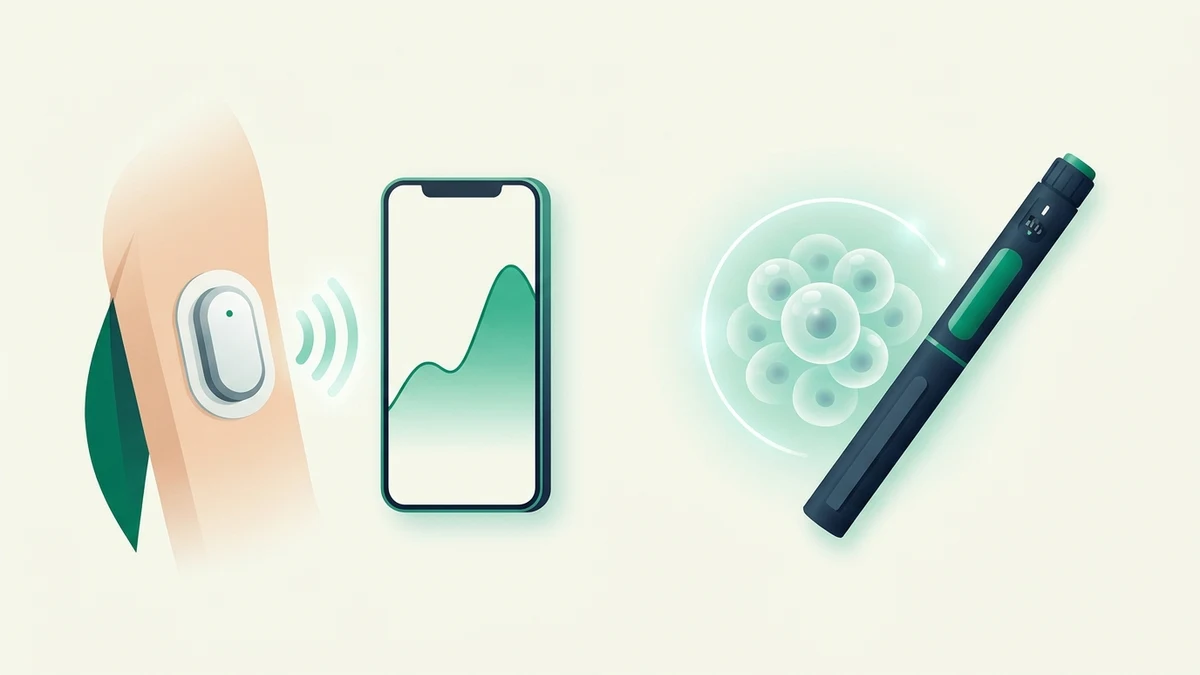
A complete, plain-language clinical breakdown of the four biggest breakthroughs reshaping Type 1 and Type 2 diabetes care—from 52-injection-per-year basal insulins and dual GIP/GLP-1 organ protection to automated hybrid closed-loop systems and stem-cell beta-cell restoration.

Diabetes therapeutics has progressed faster between 2023 and 2026 than in the preceding three decades combined. Where traditional regimens focused narrowly on lowering blood glucose—often at the cost of weight gain or hypoglycemia—modern metabolic therapies simultaneously protect the heart, kidneys, liver, and pancreatic beta-cells while dramatically reducing daily treatment burden.
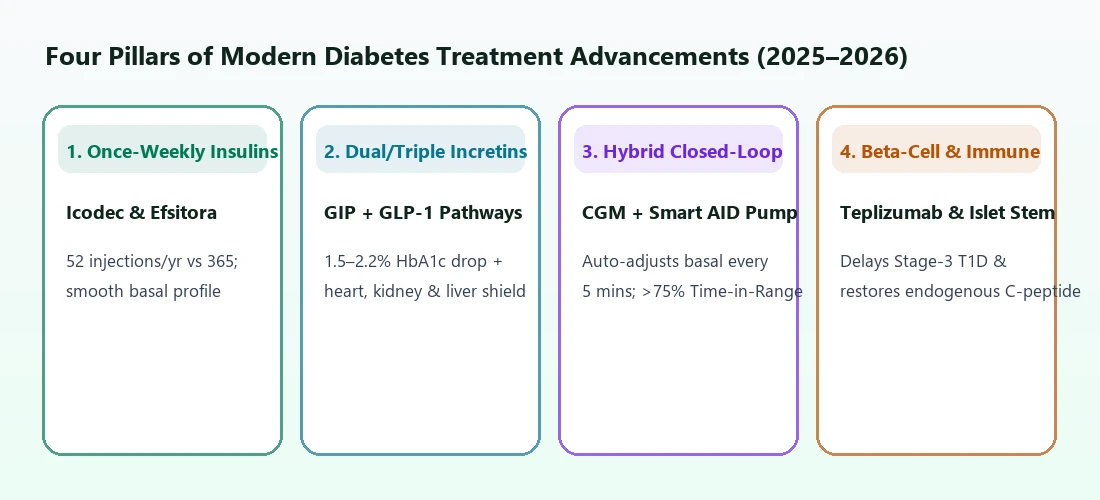
1. Once-Weekly Basal Insulins (Insulin Icodec & Insulin Efsitora Alfa)
For decades, basal insulin therapy required 365 daily injections per year, creating "injection fatigue" and delayed initiation in Type 2 diabetes. Ultra-long-acting basal insulins—led by Insulin Icodec (evaluated in the phase 3 ONWARDS 1–6 clinical trial program) and Insulin Efsitora Alfa (QWINT program)—bind reversibly to circulating albumin to form a steady, slow-release depot with a half-life of roughly 7 to 8 days.
Instead of 365 basal shots annually, patients take just 52 weekly injections. In head-to-head trials against daily insulin glargine U100 and insulin degludec in insulin-naive Type 2 diabetes, once-weekly basal insulins achieved slightly superior HbA1c reductions (-1.5% vs. -1.35%) and higher Time-in-Range (70–180 mg/dL) with comparably low rates of clinically significant hypoglycemia in Type 2 adults.
2. Dual (GIP/GLP-1) & Triple (GIP/GLP-1/Glucagon) Incretin Agonists + Oral Non-Peptide GLP-1s
First-generation GLP-1 receptor agonists mimicked a single gut hormone. Newer dual GIP/GLP-1 co-agonists (such as tirzepatide in the SURPASS trials) activate both Glucose-Dependent Insulinotropic Polypeptide (GIP) and GLP-1 receptors—amplifying mealtime insulin secretion strictly when glucose is elevated (hence minimal intrinsic hypoglycemia risk), suppressing inappropriate glucagon, slowing gastric emptying, and clearing ectopic fat from the liver and pancreas.
Meanwhile, investigational triple agonists (targeting GIP + GLP-1 + Glucagon receptors, e.g., retatrutide) add controlled hepatic fat oxidation, and small-molecule oral non-peptide GLP-1 agonists (such as orforglipron) remove strict empty-stomach water restrictions and cold-chain needle storage.
3. Automated Insulin Delivery (AID) / Hybrid Closed-Loop "Artificial Pancreas" Systems
In Type 1 diabetes and insulin-intensive Type 2 diabetes, pairing a factory-calibrated 14-to-15 day Continuous Glucose Monitor (CGM) with an algorithm-driven patch or tubed insulin pump forms a Hybrid Closed-Loop (AID) system. Every 5 minutes, the algorithm predicts where interstitial glucose will be 30–60 minutes ahead:
- Rising trend: Automatically increases micro-basal delivery or delivers a conservative auto-correction bolus.
- Falling trend (especially at 2:00 AM): Automatically suspends insulin delivery before blood sugar crosses below 70 mg/dL—slashing nocturnal hypoglycemia by more than 60% and lifting overnight Time-in-Range above 80%.
4. Disease-Modifying Immunotherapy (Teplizumab) & Stem-Cell Derived Islets
For the first time in history, Type 1 diabetes care is moving beyond pure insulin replacement toward beta-cell preservation and regeneration:
- Anti-CD3 Immunotherapy (Teplizumab): Approved for individuals in Stage 2 Type 1 diabetes (two or more islet autoantibodies plus mild dysglycemia), a single 14-day course delays progression to clinical Stage 3 insulin dependence by a median of 2 to 3 years by calming autoreactive T-cells.
- Stem-Cell Derived Islet Cell Therapy (e.g., Zimislecel / VX-880 & Encapsulated VX-264): Pluripotent stem cells differentiated in the laboratory into functional, glucose-responsive pancreatic beta- and alpha-cells have restored endogenous C-peptide production and eliminated severe hypoglycemic events in early clinical trial cohorts with brittle Type 1 diabetes.
5. Side-by-Side Clinical Comparison Table
Step-by-Step Usage & Clinical Protocol
- Bring a 14-day fasting + 2-hour post-meal glucose log (or CGM Ambulatory Glucose Profile) plus latest HbA1c, eGFR, Urine ACR, and liver ALT to your endocrinologist appointment.
- Ask your physician whether cardiorenal-protective classes (SGLT2 inhibitors or GLP-1/GIP therapies) match your kidney UACR, heart history, and BMI profile.
- If basal insulin is indicated for Type 2 diabetes, ask about regional availability and titration rules for once-weekly vs. daily second-generation basal analogs.
- Protect lean skeletal muscle on any modern weight-lowering therapy by pairing 20–25g protein per meal with twice-weekly resistance exercises.
- Never discontinue or alter basal insulin, SGLT2, or incretin doses based on online headlines without your prescribing specialist's supervision.
Common Home-Testing Mistakes to Avoid
- ⚠️ Buying unverified 'compounded' or grey-market peptide pens online without cold-chain verification or medical prescriptions.
- ⚠️ Undereating protein and skipping strength training while on GLP-1/GIP therapy, leading to avoidable skeletal muscle loss (sarcopenia).
- ⚠️ Forgetting 'Sick-Day Rules' on SGLT2 inhibitors (which doctors typically pause temporarily during severe vomiting, dehydration, or pre-surgery fasting).
- ⚠️ Expecting Automated Insulin Delivery pumps to require zero meal input—accurate meal announcements still yield the smoothest post-meal curves.
How This Helps Your Daily Diabetes Management
- ✓ Higher daily Time-in-Range (70–180 mg/dL) with markedly fewer nocturnal <70 mg/dL hypoglycemic episodes.
- ✓ Simultaneous protection of kidney glomeruli (UACR), myocardium, and fatty liver (MASLD) beyond glucose lowering alone.
- ✓ Substantial reduction in daily injection, fingerstick, and mental decision burden for patients and caregivers.

Accu-Chek Instant Wireless Glucometer Kit + 50 Test Strips & Softclix Lancets
Reliable home fingerstick calibration meter recommended across Indian diabetes clinics with Bluetooth sync.
Affiliate Disclosure: As an Amazon Associate I earn from qualifying purchases. Indicative price; live price & availability confirmed on Amazon.