Complete Diabetes Exercise Prescription: Post-Meal GLUT4 Walks, Strength Training for Muscle Glucose Sinks, Seated Soleus Pushups & Safety Rules
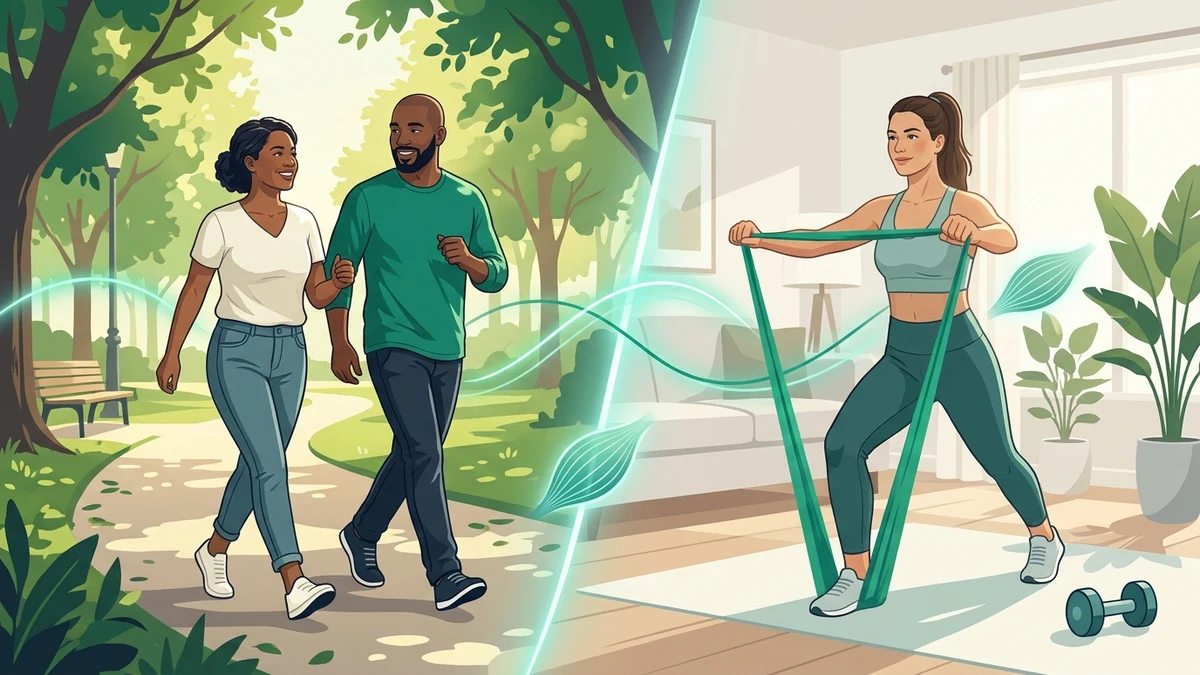
How contracting muscles pull sugar out of your bloodstream even when insulin is resistant, why combining short post-meal walks with twice-weekly strength training outperforms cardio alone, and the exact pre-workout glucose safety zones for insulin users.

Skeletal muscle is the single largest glucose-disposing organ in the human body, clearing roughly 75% to 80% of all post-meal bloodstream glucose. Better still, muscle cells possess a remarkable "backdoor key" that works even when Type 2 insulin resistance is high.
1. The GLUT4 "Backdoor": Insulin-Independent Glucose Uptake
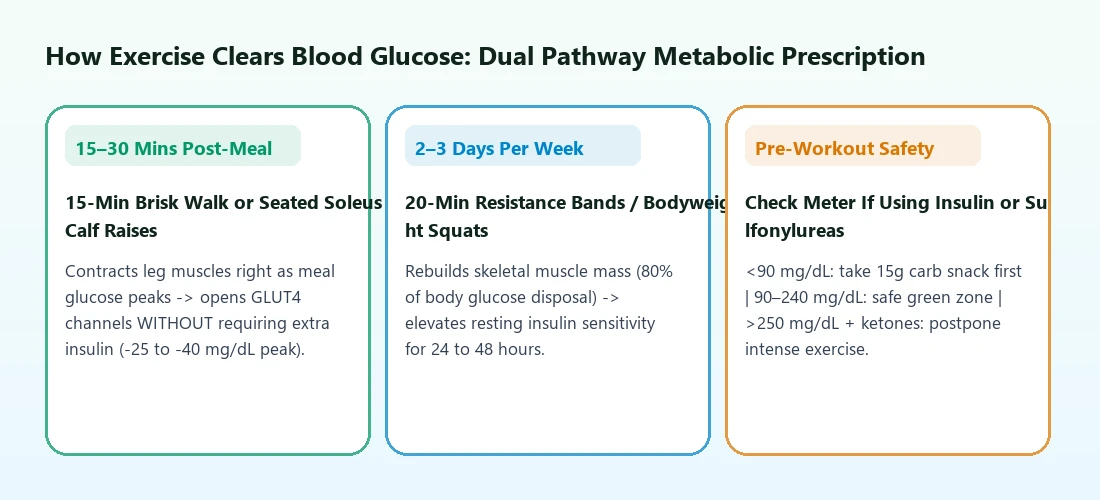
At rest, glucose transporter-4 (GLUT4) channels sit locked inside muscle cells waiting for insulin to open the door. When insulin signaling is blunted in Type 2 diabetes, post-meal sugar lingers in the blood. However, the moment muscle fibers contract rhythmically—activated by calcium release and the energy sensor AMPK—GLUT4 channels migrate directly to the cell membrane without requiring extra insulin, pulling glucose out of circulation immediately.
2. Why Three 15-Minute Post-Meal Walks Beat One 45-Minute Morning Walk
Controlled trials in older adults at risk for and living with Type 2 diabetes compared a single 45-minute morning walk against three 15-minute moderate walks begun 15 to 25 minutes after breakfast, lunch, and dinner. While both improved cardiorespiratory fitness, the three post-meal bouts lowered 24-hour and post-dinner glycemic excursions significantly more because muscle demand coincided directly with peak intestinal glucose absorption (30–75 minutes post-meal).
3. Resistance Training: Expanding Your 48-Hour Muscle "Glucose Tank"
After age 35–40, adults naturally lose 3%–8% of muscle mass per decade (sarcopenia)—shrinking the tank where glycogen can be stored. The landmark HART-D and DARE clinical trials proved that combining aerobic walking + resistance training lowered HbA1c nearly twice as much as walking or weights alone:
- Beginner Home Routine (20 mins, Mon & Thu): 2–3 sets of 10–12 chair sit-to-stands (squats), wall or counter pushups, resistance-band seated rows, standing overhead band presses, and standing calf raises.
- 48-Hour Afterburn: Depleting muscle glycogen stores during strength training keeps insulin sensitivity elevated for 24 to 48 hours afterward as muscles replenish glycogen from blood glucose.
4. Seated "Soleus Pushups" for Office Desks, Rainy Days & Knee Arthritis
The deep soleus muscle in the lower calf is uniquely rich in slow-twitch oxidative fibers designed to use blood-borne glucose and VLDL triglycerides continuously without glycogen fatigue. Sitting tall with feet flat on the floor, lifting both heels to maximum height while keeping toes planted, and lowering smoothly for 10–15 minutes after meals blunts postprandial excursions by ~30%–50% even when standing walks aren't possible.
5. Pre-Exercise Blood Glucose Safety Zones (Especially for Insulin / Sulfonylurea Users)
Step-by-Step Usage & Clinical Protocol
- Walk comfortably for 12–15 minutes starting 15–25 minutes after lunch and dinner (or perform 10 minutes of seated soleus heel raises at your desk).
- Add two 20-minute non-consecutive days per week of gentle full-body resistance training (chair squats, wall pushups, resistance bands) to build muscle glucose storage.
- Break up prolonged sitting every 45–60 minutes during workdays with 2–3 minutes of standing or hallway movement.
- Always wear cushioned wide-toe athletic shoes with seamless moisture-wicking socks and inspect both soles after workouts.
- If taking insulin or sulfonylureas, check pre-workout glucose and keep fast-acting 15g glucose tablets in your pocket (watch for delayed nocturnal lows 6–10 hours after long workouts).
Common Home-Testing Mistakes to Avoid
- ⚠️ Exercising vigorously with active proliferative diabetic retinopathy without ophthalmologist clearance (avoid heavy Valsalva breath-holding, head-below-heart inversions, or jarring impact).
- ⚠️ Walking barefoot on rough outdoor tracks or indoor tiles when peripheral neuropathy is present.
- ⚠️ Injecting rapid insulin directly into a thigh or arm muscle right before working that exact limb (accelerated blood flow speeds insulin absorption and triggers sudden lows).
- ⚠️ Going 4 consecutive days with zero movement—muscle GLUT4 sensitivity benefits begin fading after 48–72 hours of complete inactivity.
How This Helps Your Daily Diabetes Management
- ✓ Lowers 90-day HbA1c by an average of 0.5% to 0.8% when aerobic and resistance exercise are combined.
- ✓ Reduces resting blood pressure by 5–8 mmHg, lowers triglycerides, and preserves mobility and balance with age.
- ✓ Flattens immediate 2-hour post-meal spikes without requiring medication escalation.

FreeStyle Libre 2 / 3 Waterproof Sensor Overpatches (25-Pack Breathable Cotton)
Top-rated by 420+ Indian community members for monsoon & summer workout sweat protection without skin irritation.
Affiliate Disclosure: As an Amazon Associate I earn from qualifying purchases. Indicative price; live price & availability confirmed on Amazon.
- Diabetes Care — ADA Position Statement: Physical Activity/Exercise and Diabetes ↗
- Diabetologia — Advice to Walk After Meals Is More Effective for Lowering Postprandial Glycemia in T2D Than a Single Daily Walk ↗
- JAMA — Effects of Aerobic and Resistance Training on Hemoglobin A1c Levels in Patients With Type 2 Diabetes (HART-D) ↗